|
Ashkelon - the Magic of the Ancient World |
|
|
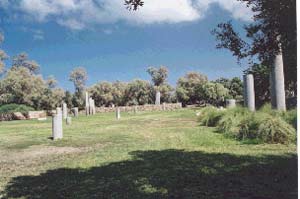
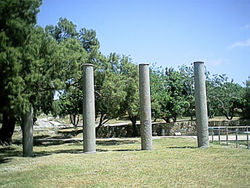
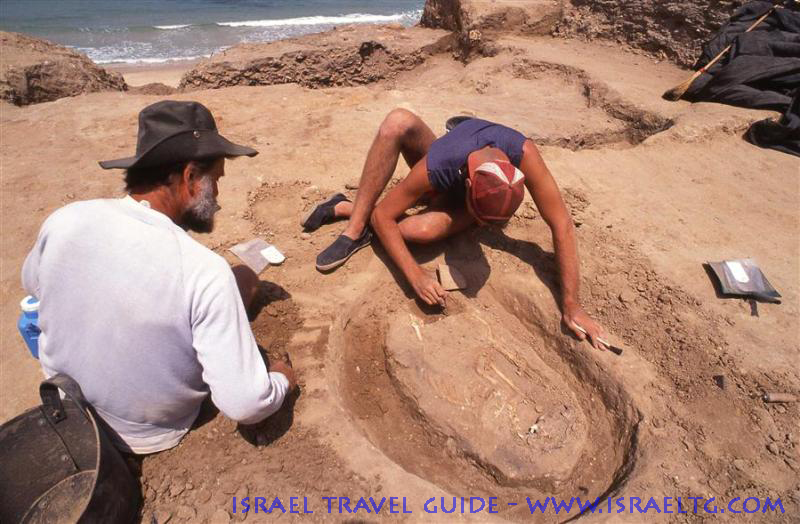
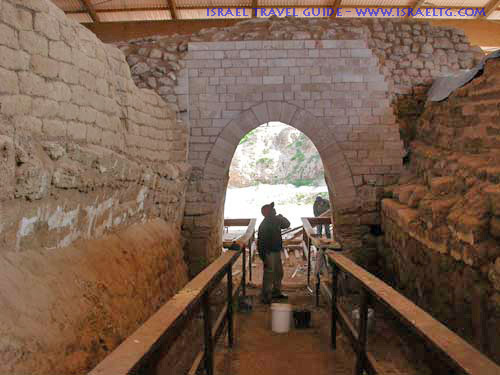
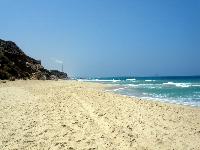
The city of Ashkelon is one of the earliest cities in Israel. Its name enchanted and attracted tourists, researchers, intellectuals and warriors that were bewitched by its delights and wrote their impressions throughout its history. Tel Ashkelon (the Ashkelon Mound), located at the heart of the Ashkelon National Park, actually tells the story of the land of Israel from the early bronze period (the end of the 4th century BC) up to the Mamluc period (the 13th century AD). Archeological findings uncovered over the years in the mound and its surroundings indicate continuous settlements in Ashkelon, and that throughout the years, the city held a strategic, governmental and commercial role of the utmost importance. To reach the Ashkelon National Park, travel on road number 4 and turn west, towards the sea, in the Ashkelon junction. Drive along Ben-Gurion Street, until you reach a T-junction at its end. Turn left to Ben Amar Street, drive for about 300 meters up to the entrance to the National Park. A tour of the park lasts about one and a half or two hours. Of the Silk Road and Via Maris Ashkelon was used as a key port city that controlled commercially significant junctions of roads such as the Silk Road from the Orient and the Roman Via Maris from Egypt and Africa north towards Syria and Mesopotamia. In certain eras, it was a virtually independent city, which held a diverse trade of agricultural products, textiles, wine, pottery, jewelry and more. All the peoples of the area, wishing to control this part of the world, headed first towards fortified and strong Ashkelon. By doing so, they declared their intentions and strength. All of them, starting with the Canaanites and the Philistines, followed by the Assyrians, Babylonians and Persians, the Greeks and the Romans, and ending with the Crusaders and the Muslims, have left their marks on the city. From the Canaanite Gate to the Temple Archeological digs performed in Tel Ashkelon over the years revealed only a fraction of the treasures of the city. The crown and glory of the findings is the "Canaanite Gate", located near the entrance to the city, where the tour begins. The unique gate, through which it is currently impossible to enter, was one of the Canaanite city gates. This is the earliest arched gate found throughout the world. According to estimates, it was built in 1850 BC, and was remarkable preserved for thousands of years. An additional fascinating find is the Canaanite city temple, located outside the gate, along the city wall. Excavations in the temple uncovered a figurine of the Baal shaped like a calf, made of bronze and gilded with silver. The temple probably served travelers and merchants that wished to pray before boarding the boats moored in the city's docks. From the Top of the Cliff Walking along the path marked by arrows leads to a viewpoint located at the north-western part of the gate. From here there is a panoramic view of the entire north and western part of modern day Ashkelon, and its beautiful seashore. Looking south and east, one can view the size and beauty of Tel Ashkelon, and the outline of the dirt embankment and the wall that surrounded the city. From there, you follow the cliff path south. On the way, one may get an impression of the height of the cliff and its steep escarpment from the sea at its feet. The path continues to the center of the park, and enables one to descend westwards toward the organized beach. From the beach, one can see the impressive fortifications of the city. Here, the path continues south on the soft sand. On the left and above is the western part of the Persian dog cemetery. Digs on this site revealed the remains of about 1,000 dogs that were buried in an organized fashion, probably by the Phoenicians that inhabited Ashkelon at the time. At this point along the beach, a breeding center for sea turtles stands during their breeding season. A Hole Hanging by a Thread The path continues to the rocky beach, where swimming is prohibited, and to the marble pillars wedged horizontally in the sea wall. The purpose of these pillars is unclear, and it seems they were used to strengthen the wall where the city's city gate was located. One may end the tour here, climb back up towards the stairs and the center of the park, or continue south along the beach to see parts of the wall and remnants of water holes that were used when the city was under siege. At the exact point where the wall ends and joins the sea, there is a giant medieval water hole, which collapsed so that half of it remains hanging by a thread.
This is actually the southernmost point of Tel Ashkelon, and the end of the tour. From here, turn north to ascend the staircase and return to the center of the National Park.
|
|